

Most discussions about vibe coding get stuck on the question of whether or not it’s a legitimate way to build production-ready software (spoiler: it’s not). But that misses a different question entirely: what are vibe coding tools actually good for?
If you’ve ever walked into an architecture firm, you’ve probably seen a scale model of a project on display. You can gather around it, point at the rooflines, debate window placement, and see the overall vision for the project. But unless you’re an ant, you probably won’t try to move into one.
At Vertical Motion, we think of vibe coded projects like those architectural scale models: they’re a great starting point to chart your path forward to something scalable – but you need the right resources to bring that vision to life.
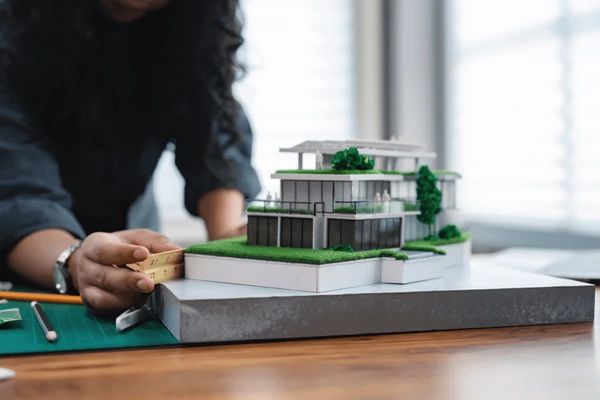
What is this, a house for ants?
Vibe-coded apps are a starting point, not a finished product
A maquette is an excellent shorthand for the broad features you want, but it can’t tell you anything about the engineering work your project will need. No matter how good the model looks, it’s up to the architects and engineers to make the physics work.
Vibe-coded projects look polished on the surface. But to scale properly, they’ll need to be built out with security frameworks, scalable architecture, and maintainable code.
Here are just a few reasons why vibe coded projects often don’t work in production:
- One study found that AI models produced bugs 48% of the time.
- AI models recommend software packages that don’t actually exist over 5% of the time.
Issues like these can create tech debt that you’ll need a development team to fix. The prototype can’t become the product, but it can be an important first step in getting there. Vibe coding tools give you a sandbox to create your vision, test it with users, and communicate clearly with developers when you need to build the final version.
The creative sandbox
Vibe coding is an excellent way to experiment before committing in any single direction. You can try a sidebar navigation versus a top menu, or test whether your dashboard should lead with charts or a task list. At this stage, you’re building to learn what works and what doesn’t. If something doesn’t work, you can just start over.
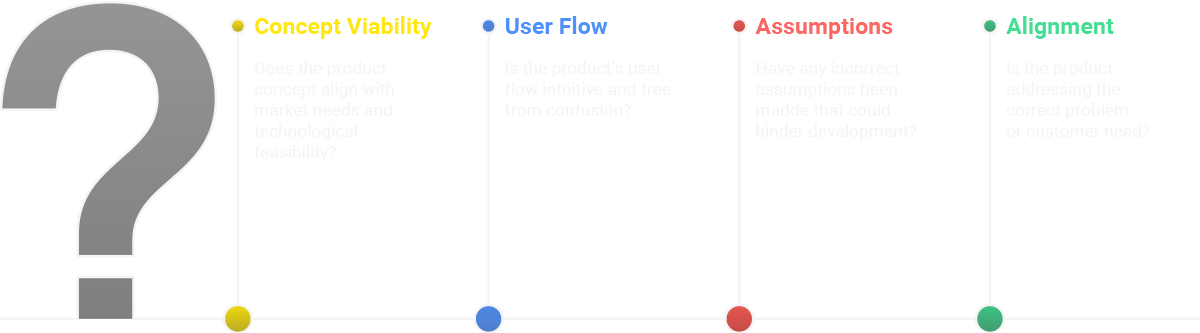
Along the way, you’ll get answers to these questions:
- Does this concept actually make sense?
- What’s confusing about the flow?
- What did I assume that I shouldn’t have?
- Is this even the right problem to solve?
For example, imagine a nonprofit director with an idea for a volunteer scheduling tool builds a quick prototype. She might try a list view, then realize that a calendar view is the only one that makes scheduling conflicts visible at a glance.
One caveat: AI tools might not generate what you envision if you don’t give them enough context. If you have a clear idea that you’re struggling to bring to life with AI, you can always skip this step and seek out a developer.
Once you’ve explored enough to decide on a direction, you’re ready to test your prototype with real users.
The reality check
User testing can be critical if you need to make a case for a bigger development budget, because it can tell you what direction to take your project in for maximum business impact.
Fortunately, you don’t need a formal research setup to get user feedback on your prototype. Here’s a simple approach to user testing:
- Find a few representative users. Even 3-5 people can reveal major issues, as long as they’re people who would actually use the tool you’re building.
- Give them a realistic task. Choose something specific that you want real-life users to do, and test that.
- Watch and listen. Free tools like Contentsquare can give you heatmaps and recordings that show you where users get stuck or confused.
Below is a primer on how usability testing can help you design for real users:
Imagine the nonprofit director in the earlier example tests her prototype with real volunteers, and discovers they keep accidentally deleting their own shifts. From there, she could try adding a confirmation step, or separating “swap” and “delete” into distinct buttons and test again.
Being able to see and interact with a rough version can bring real-world challenges like these to light in ways that words alone can’t, and it gets you one step closer to something that’s ready for full development.
The conversation starter
Vibe-coded projects are excellent ways to show developers what you really want. When you hand off a prototype to a development team, they get more clarity on what you envision.
In general, your prototype is ready for a developer if:
- It demonstrates the core idea, even if it’s rough
- You can walk someone through the main user flow
- You’re open to hearing that the “real” version might work differently
A working prototype can also function as a sort of translation tool between non-technical founders and development teams. With a description alone, there’s often a huge gap between what you’re imagining and what you’ve communicated – while a working prototype makes implicit assumptions visible.
Here’s what a developer might notice when they look at features you’ve built, and the technical needs they communicate:
| What you built | What it tells your developer |
|---|---|
| A dashboard with live metrics | Need for real-time data architecture |
| User login screen | Need for authentication and security |
| Inventory that syncs with sales | Need for integration with existing systems |
| Report generation feature | Need for database structure and performance |
Your prototype might need development work, but what you’ve built has real value. You’ve clarified your vision, tested your assumptions, and created something concrete to build from.
From prototype to product: what developers bring to the table
A prototype is a nice facade that shows what you want, but developers can help you build something that works consistently, securely, and at scale. They’ll help ensure your app can handle real user volume, protect sensitive data, and evolve as your needs change.
After you’ve built your prototype, developers can work with you to:
Understand what you’ve built
That also includes understanding what you’re missing and how long it will take to fill in the gaps. If you need help, our Application Health Assessment can give you a clear roadmap that outlines the major fixes you’ll need to be production-ready and how long they’ll take.
Plan the path to production
This means making decisions about architecture, security frameworks, and integrations. If you’re seeking funding, a development team can help you offer the technical due diligence investors are looking for.
Build a solid foundation
With a plan in place, developers can start building out the infrastructure, security, and reliability your product needs to serve real users at scale. That often includes refactoring code, implementing security protocols, setting up reliable integrations, and creating clear documentation.
Grow intentionally
Every app’s scaling journey is different. As your user base grows, you’ll face new decisions about infrastructure, performance, and architecture that you’ll need to manage based on your budget and growth trajectory.
Ready to build?
A working prototype is a great head start towards building something with real value, but it’s not a requirement. If you have a clear vision but haven’t built anything yet, a development team can work from descriptions, sketches, or even a conversation about what you’re trying to accomplish. The prototype is one path to clarity, but it’s not the only one.
Whether you’ve built a working prototype or you’re still at the napkin-sketch stage, our team at Vertical Motion can help you understand what it will take to bring your vision to life, build it with you from the ground up, and help you maintain it so it can keep adding value to your business. Get in touch today to learn more.

Vertical Motion is a trusted Canadian software development and entrepreneur assistance company that has supported the global efforts of startups, non-profits, B2B, and B2C businesses since 2006. With headquarters in Calgary and Kelowna, and team members coast to coast, Vertical Motion is recognized as an award-winning leader in the technology industry. Our team of executive advisors, project managers, software developers, business analysts, marketing specialists, and graphic designers have extensive experience in several industries including — Energy, Finance, Blockchain, Real Estate, Health Care, Clean Technology, Clothing & Apparel, Sports & Recreation, Software as a Service (SaaS), and Augmented & Virtual Reality (AR/VR).
Come chat with us and let us take you “From Idea to Execution and Beyond!” 🚀