

Traditional project management assumes a simple truth: the people working on the project know what they’re doing and why. Today, AI coding tools allow anyone to bypass the “how” and “why” to arrive instantly at a finished product.
But software is always a work in progress, and if you don’t understand how it was built, you can’t fix bugs, patch security issues, or maintain it properly. Without decision logs or risk tracing, you’re building a “black box,” with hidden bugs and risks you can’t see.
At Vertical Motion, our values guide our approach for project management – which is still essential for building good products.
Project management principles vs. vibe coding
AI coding tends to exist in a “perpetual middle” where you’re just generating and iterating in a loop. Ryan Broderick compares it to a slot machine: “Vibe coding, like every new trend coming out of Silicon Valley, turns this process — the entire act of creativity, itself — into a slot machine. One more pull on the AI and maybe it will figure it out for you.”
The danger of this is that it eliminates the project management tools that have defined software development for good reason. You need to manage the process in order to manage the outcome; skip it, and you’ll be stuck in a loop creating endless prototypes that don’t scale.
In some cases, this is also true of low-cost outsourcing. Hire the cheapest developer, and you’ll be inheriting the same problems you would with a vibecoded prototype: unclear documentation, structural problems, and security vulnerabilities that create tech debt and cost you more in the long run.
Our project management principles are backed both by our values and rigorous industry standards to create a solid blueprint, controlled build, and final execution with long term staying power. Below is how we create solutions instead of AI-generated problems.
Phase 1: The blueprint
AI is a “yes-man” – it will build exactly what you asked for, even if it ends up solving the wrong problem. Worse, it often:
- Overlooks non-standard use cases, meaning unexpected inputs cause problems.
- Creates “spaghetti code” that’s difficult to maintain and update.
- Ignores security protocols, putting systems at risk and making it an uphill battle to get security certifications later on.
Vibecoders often find that they end up spending way more time and money than they thought they would fixing problems after the fact rather than preventing them from the start. To do that, you need a clear blueprint for your project so you can spot and fix issues early, build out new features, and keep projects on track.
Leave it better than we found it
We follow the familiar campground rule: leave it better than we found it. Before we write a line of code, we’ll create a blueprint that defines your goals and project scope clearly. That starts with:
- Well-defined roles that assign ownership, not just finished output.
- Tracking progress to make sure we’re always moving in the right direction.
Clear roles and progress tracking helps us make sure we’re building value from day one, rather than unintentionally creating problems you’ll have to fix later.
Fight for clarity
When we show up, we’re ready to learn about how you want software to solve your most pressing business problems. Fighting for clarity means we aren’t just order-takers; we’re problem-solvers with a plan that includes:
- Transparency about roadblocks, including an Application Health Assessment if we’re working on existing software.
- Clear goals and objectives, including the why behind every feature.
This keeps your project scope small and ensures you’re not spending money on features that don’t have a real business impact.
Achieve quality through persistence
Solving software problems requires relentless and consistent effort, and we’re committed to maintaining quality when the going gets tough. This commitment is baked into every roadmap we develop with:
- Careful budgeting and scheduling to make sure we deliver value at the cadence you expect.
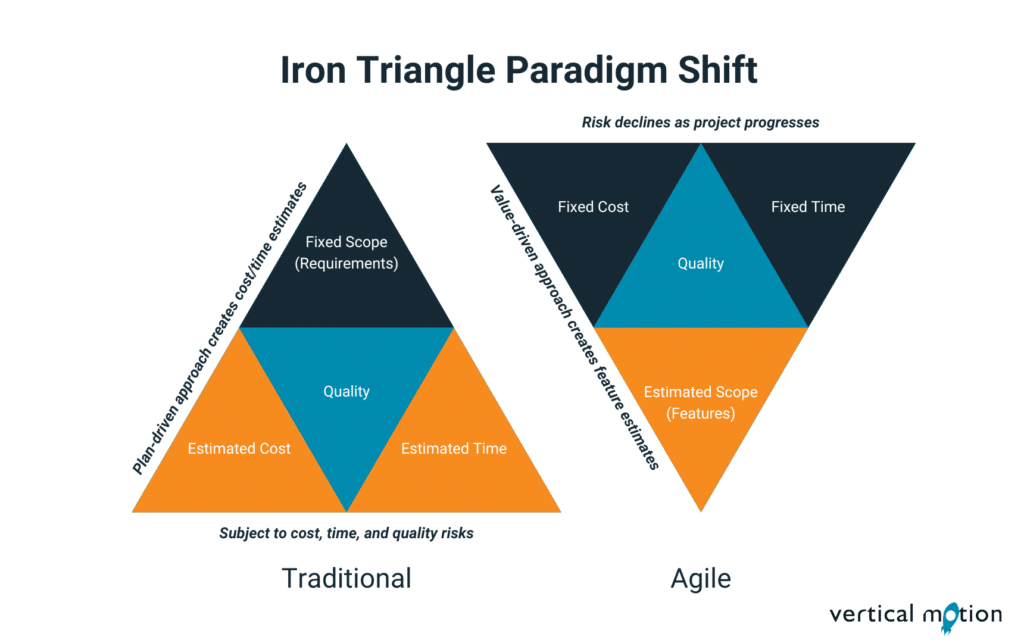
- Plans that account for scope change rather than relying on budgets and timelines to move.
This allows us to deliver value at the cadence you expect – building in the opportunity to adapt at each stage.
Phase 2: The build
Vibe coding is prone to “Scope Gallop” where the project changes direction every time you enter a new prompt. When you add a new feature, it might change other things you liked about the project – requiring you to go back and make edits to restore the original version.
There’s also no way to test and iterate each feature individually, so you end up with a cluster of untested features that may or may not work well with your other business software.
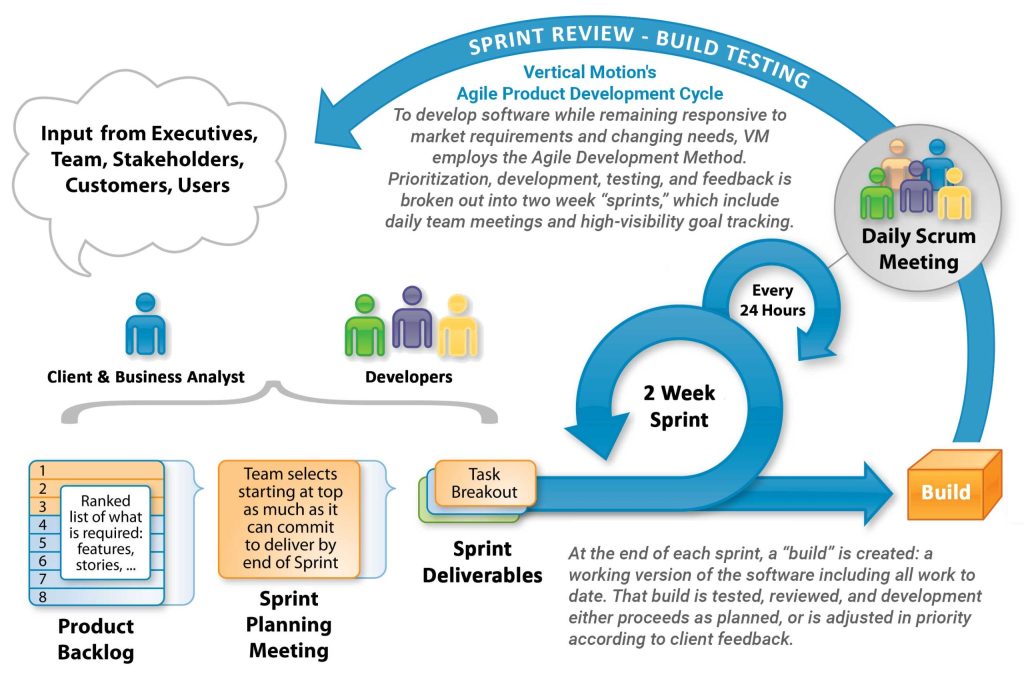
Agile development cycles ensure you know exactly what will change and when it will happen. Each sprint also builds in an essential review process so that quality assurance is baked into each stage of development, rather than being an afterthought.
Create passionately
We don’t just want to send invoices – we want to believe in a product. That means we want to hear about what you want and why at every stage. Our agile development process includes:
- Clear communication after each two-week sprint to incorporate your feedback at each stage of development.
- Iterative development cycles to ensure we’re hitting the right goals.
Speak with our actions
We make choices with the courage of our convictions, internally and externally. If we change direction, you’ll hear about it first – and it will be a conscious, documented choice, not an accident. We establish:
- Accountability and responsibility with all stakeholders involved in the project.
- Change management processes if there’s a significant transition that requires us to shift gears.
We analyze every pivot for its impact on the budget and timeline, and we’ll tell you when a shift will change either one.
Phase 3: The Finish Line
Entrepreneurs often face the “80% hurdle” when using AI: it got them most of the way there, but the last 20% of the work (the bugs, the UI polish) is long and frustrating. After launch, they might discover bugs and issues that they didn’t even know they had – leading to a scramble to manage edge cases it didn’t predict.
When you’re working with a developer who relies on AI, project handoffs get complicated. They might not have checkpoints built in like:
- Decision logs
- Clear documentation
- Tracing of risk accumulation
Our project management principles set standards for smooth handoffs and a roadmap for long-term maintenance. We don’t just drop a project on your lap; we make sure you can actually use, benefit from, and update your software easily.
Innovate empathetically
We know what it’s like to be an entrepreneur: frustrating, invigorating, and even scary. The closer your project gets to the finish line, the more nerve-wracking it can be. As we wrap up, we:
- Make projects make sense including clear documentation so internal teams can understand what we’ve built.
- Close loose ends to ensure the handoff is a smooth transition, not a cliff your internal team has to scramble to climb.
Product launches are much less stressful when you have a clear roadmap for handling any issues that come up in production.
Show dauntless curiosity
Technology is always changing, and we’re always learning and evolving based on a love of the cutting edge. As we maintain your software, we’ll:
- Monitor closely to identify potential API and security updates as operating systems and devices change.
- Manage risk with rigorous and ongoing testing and patches so your software keeps working smoothly.
The software we build is never just a one-off project. We always aim to continue working with your team to create smooth sailing, even after launch.
From vibecoded to value-added: what project management delivers
Project management gives you peace of mind and security rather than just a flashy prototype. Our approach is grounded in our commitment to clarity, accountability, and passion for building good products. We don’t just deliver software; we ensure you have the roadmap to own, maintain, and grow it.
Ready to build your next project? Reach out to us today to take your project from idea to execution with a team prepared to manage it effectively.

Vertical Motion is a trusted Canadian software development and entrepreneur assistance company that has supported the global efforts of startups, non-profits, B2B, and B2C businesses since 2006. With headquarters in Calgary and Kelowna, and team members coast to coast, Vertical Motion is recognized as an award-winning leader in the technology industry. Our team of executive advisors, project managers, software developers, business analysts, marketing specialists, and graphic designers have extensive experience in several industries including — Energy, Finance, Blockchain, Real Estate, Health Care, Clean Technology, Clothing & Apparel, Sports & Recreation, Software as a Service (SaaS), and Augmented & Virtual Reality (AR/VR).
Come chat with us and let us take you “From Idea to Execution and Beyond!” 🚀